
Keep the failure. Follow the fix.
Hold the affected units. Record the cause. Send the work back to the operation that needs it.
See a demoSee how it works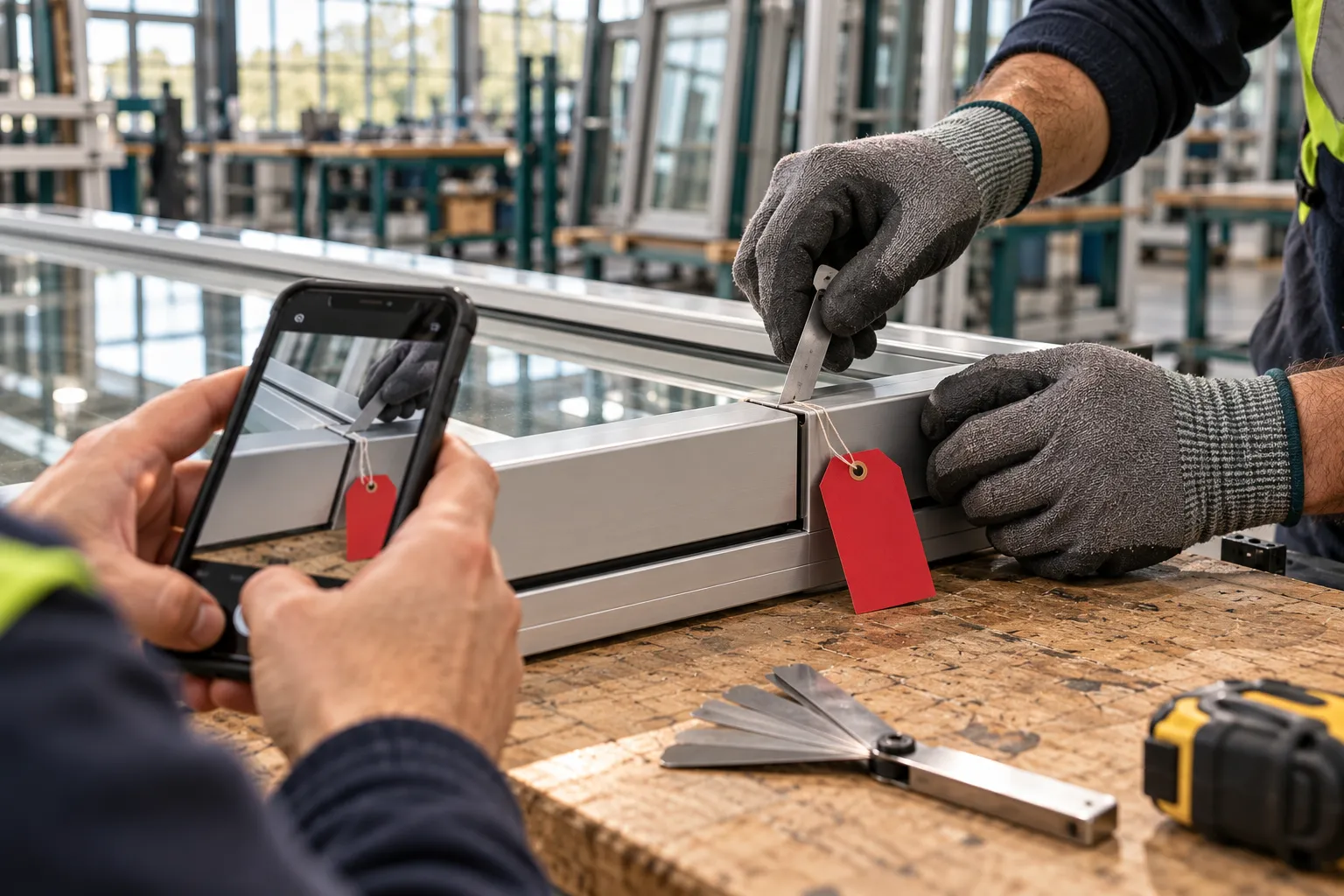
Found at assembly. Back to machining.
An example unit returns to machining, repeats the remaining operations and is inspected again.
Read the KPIs beside the quantities.
Fictional quality shift: 100 first inspections and 240 paid people-hours. The return path below follows one affected unit.
- First-pass yield
- 94.0%
94 units passed first time / 100 units first inspected.
- Rework share
- 5.0%
12 rework people-hours / 240 paid people-hours.
Fictional example · One affected unit · Follow the events in order
1 · Assembly
Failure found here.
2 · Back to machining
Correct the work.
3 · Repeat the route
Assembly, then inspection again.
Repeat every remaining operation. Count the completed unit once.
Evidence
Keep the defect, reason and photos.
Action
Record the cause and corrective work.
History
The first failure stays on record.
How this works in detail
Hold the exact units affected.
A failed inspection or damaged unit is held on the batch, the operation and the quantity affected, with the defect, its reason and photos as evidence. The hold tells everyone the work cannot move until it is resolved.
An investigation on every failure.
A manager records the cause, the corrective action, the person responsible and the follow-up date. The original evidence is kept, so the investigation can be read months later.
Send the work back where the fix belongs.
A problem found at assembly may need work at cutting or machining. The manager sends the units back to a chosen workstation, and they go through every remaining step and check again. The batch counts them once.
Design changes are not quality failures.
Work repeated because the drawing changed is recorded as a design change, separately from work repeated because it failed. Root causes, rework time and repeat problems show in the reports, each in its own column.
Can a correction erase a failure?
No. Corrections keep the original entry. A repaired unit is counted once in production, and its first failure stays in the quality history.
Can we attach photos to a defect?
Yes. Photos are attached to holds, inspections and investigations as evidence and are kept with the record.